
Once just a place you passed through to get somewhere else, the airport is now where brands can take off too.
By Dhara Mandaliya
TL;DR
- India now ranks as the third-largest air transport market in the world, in terms of departing passenger traffic, behind only the U.S. and China.
- Reportedly, 91% of global consumers say experiential activations leave them feeling more optimistic about a brand or product.
- The ‘casino effect’ impacts how we spend at airports – continuous artificial lighting can disrupt circadian rhythms and make us lose track of the outside world, making us more susceptible to a spendthrift attitude.
- 76% of consumers now expect personalised engagement across brand touchpoints.
- As global travel continues to grow, we can expect to see greater sophistication in captive audience marketing with exclusive, location-specific products and experiences that turn ‘dead time’ into opportunities to connect with consumers.
In 2024, Swiggy Instamart created buzz at Bengaluru’s Kempegowda International Airport by taking over a baggage carousel. Over 7,000 travelers spotted a teddy bear, bag of flour, air fryer and other such items under branded cloches, revolving along with suitcases. Swiggy’s activation solved two problems at once: it not only breathed life into the boring, passive experience of luggage collection but also seeded the idea that customers could purchase just about anything on its platform.
The airport was once just a place you passed through to get somewhere else. Now, brands like Swiggy are transforming them into destinations of their own. “Airports today feel less like transit points and more like malls that lead me to my flight gate… Airport marketing has become less about sophistication and more about crowded brand-building in recent years,” says brand positioning coach Manish Ahuja.
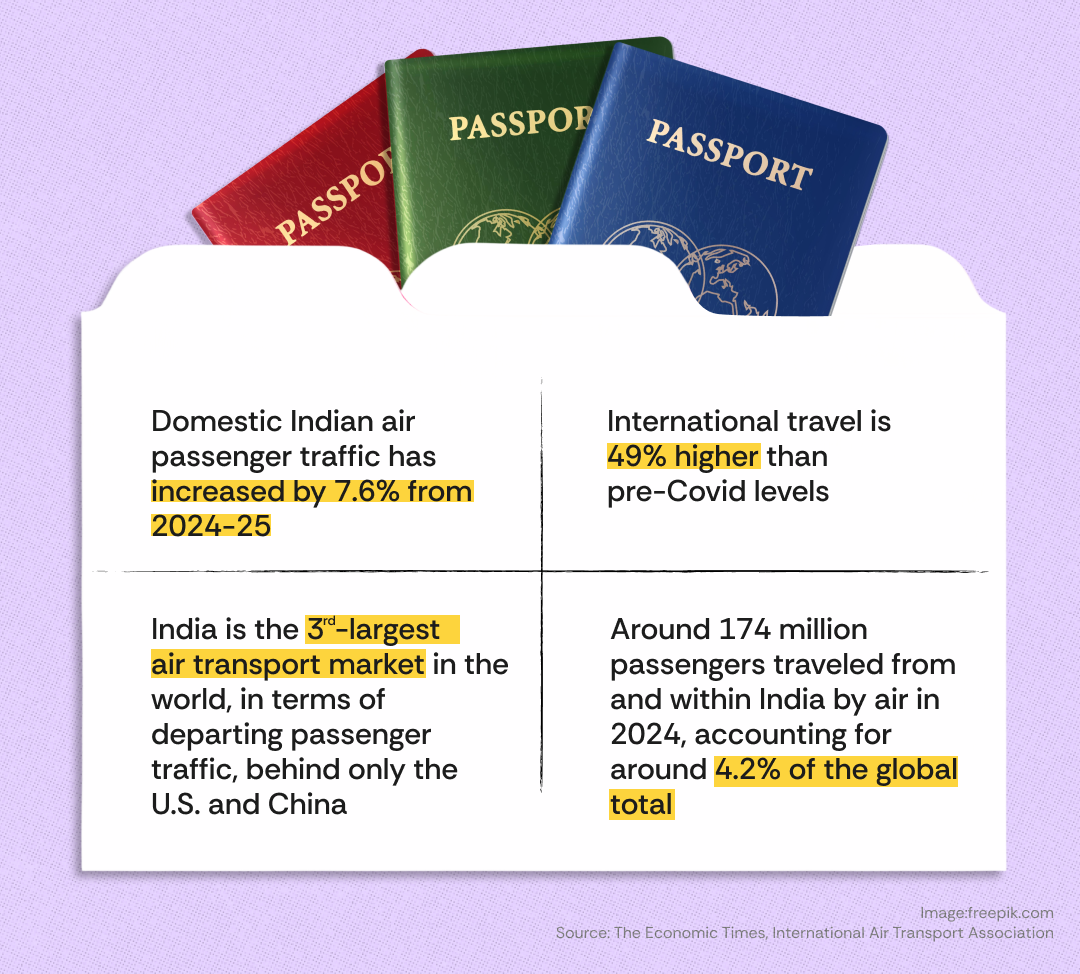
In India, domestic air passenger traffic has increased by 7.6% from 2024 to 2025 and international travel is 49% higher than pre-Covid levels. India now ranks as the third largest air transport market in the world, in terms of departing passenger traffic, behind only the U.S. and China. Around 174 million passengers traveled from and within India by air in 2024, accounting for around 4.2% of the global total.
With increased travel, airports are becoming a space ripe for captive audience marketing. Psychologist Tanya Vasunia attributes this to the ‘casino effect.’ “The lack of natural light and windows, coupled with continuous artificial lighting, can disrupt a person's circadian rhythm, much like a casino. This creates a sort of utopian effect where people lose track of the outside world, making them more susceptible to a spendthrift attitude,” she says.
EMOTIONS CAN DRIVE SHOPPING HABITS
There’s another interesting psychological effect at play here: the feeling of permission, both to spend impulsively as well as to indulge in premium experiences. “Emotional states are a powerful driver of impulsive purchases. When you’re excited, perhaps at the beginning of a trip, you’re more likely to make an impulsive buy fuelled by the rush of adrenaline and endorphins,” says Vasunia. “Conversely, a ‘pick-me-up' purchase can occur after a bad experience like a frustrating holiday as a way to self-soothe.”
In fact, 76% of consumers now expect personalised engagement across brand touchpoints. This mindset presents an opportunity for brands: anticipate airport-specific needs and offer experiences accordingly.
For example, Bengaluru’s Kempegowda International Airport introduced a sensory room (with mood lighting, a bubble tube and galaxy projector) for anxious, overwhelmed travellers in need of a calm space to decompress. Likewise, could Uniqlo make wrinkle-proof blazers that pack into carry-on pouches for quick business trips? Could Starbucks offer exclusive superfood smoothies available only for red-eye flight passengers? Could Google Maps add an ‘Airport Mode’ feature to help us navigate food and shopping options in terminals?
DESIGN FOR SPECIFIC CONTEXTS
Even within a singular airport context, the purpose of a trip also fundamentally informs shopping behaviour. “For business travellers, purchases are often practical and a means to an end, sometimes driven by a desire to bring a last-minute gift home for their children,” says Vasunia. “For those on holiday, the purchases are more about leisure and the type of items available – from local food to gifts – reflects the destination. The act of shopping itself can also be a way to ‘kill time’ during layovers or delays.”
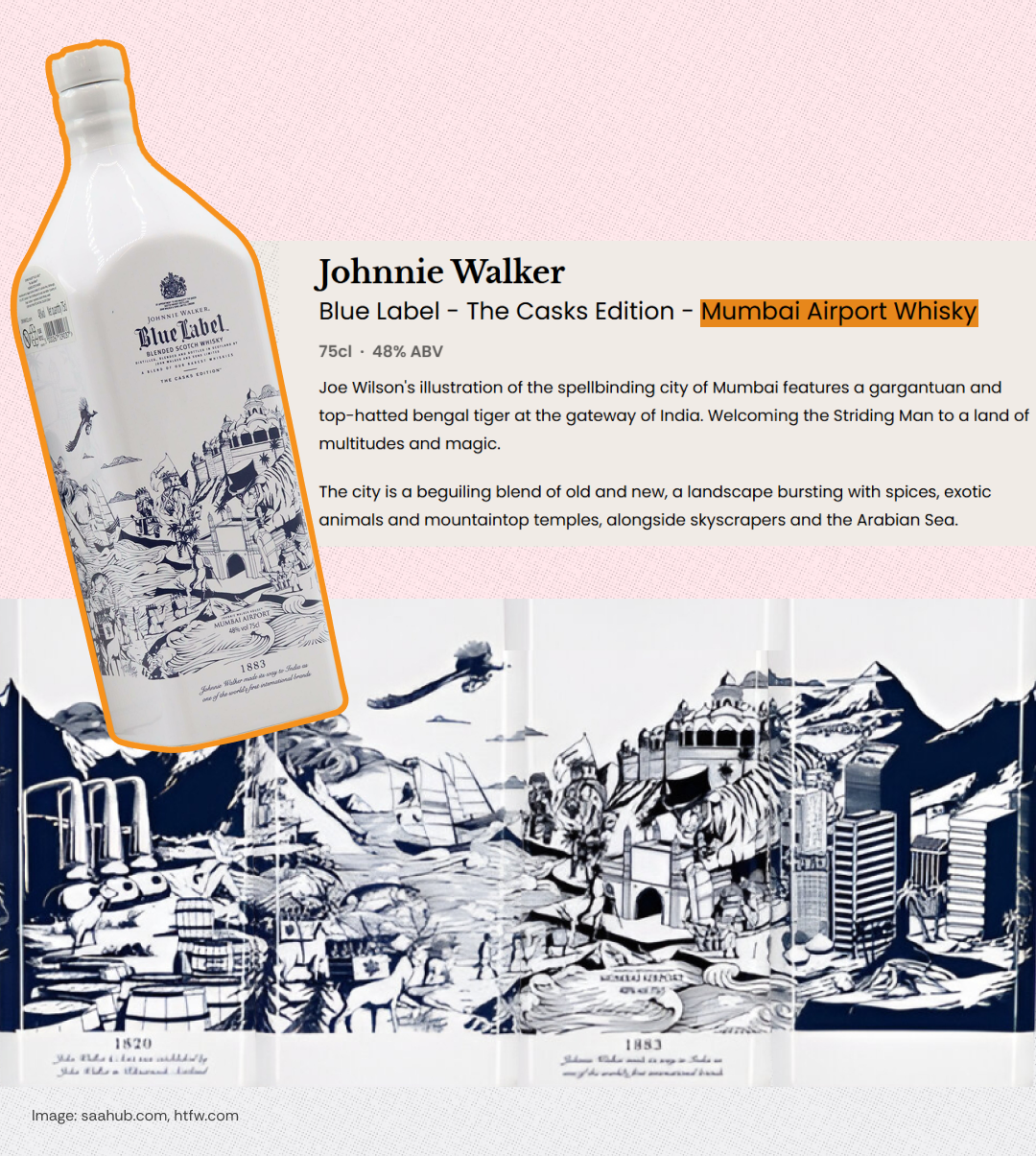
Luxury brands have always seen a clear opportunity in airport retail, particularly duty-free zones where premium buys can feel like a souvenir. Take Johnnie Walker – it launched a special “The Casks Edition - Mumbai Airport” version of its Blue Label bottles. The line features India-inspired artwork by award-winning artist Joe Wilson who illustrated his journey from Scotland to Mumbai, available exclusively at the airport.
Ordinary, everyday products can feel like special treats too. Haldiram’s, for instance, has given its products at the airport a total makeover – it offers assorted packs, gourmet collections and fusion options in luxe, sleek packaging that seek to justify a higher price point and function as gifts for both Indian and international palettes.
INTEGRATE, DON’T DISTRACT
Even other waiting spaces like corporate parks, subway stations, and toilets exist with their own unique consumer psychologies that must be studied and understood. For example, boAt could lean into subway marketing in Delhi and set up vending machines at busy stations like Rajiv Chowk or Kashmere Gate stocked with electronics like charging cables, powerbanks, and headphones – essentials that are commonly lost or forgotten by stressed out, time-strapped commuters during their morning or evening rush.
“I still remember a time when only luxury cars were displayed at Mumbai airport. But today, even the smallest brands are finding ways to create an impression, whether through a placement at a café stall or a QSR outlet inside the airport,” says Ahuja.
He’s right – a little goes a long way. To build on its ethos of fitness, Decathlon could place discreet QR codes on staircases in public spaces like malls that offer discounts or early access to new products, rewarding a consumer’s choice of choosing stairs over elevators. In fact, brands like Kulfi Collective (Drip’s parent company) are already pushing the boundaries of experiential marketing with AR/VR activations like its custom interactive video game for Bombay Sweet Shop inspired by the motichur laddu.
Reportedly, 91% of global consumers say that experiential activations like these leave them feeling more optimistic about a brand or product. When done right, such initiatives can function as an opportunity for connection rather than a marketing ploy to extract time, attention and money.
BEYOND TRADITIONAL RETAIL
Captive audience marketing needs fresh thinking, beyond a physical store. Brands could experiment with non-retail setups, using dwell time to create memorable consumer interactions that don’t feel overly transactional – like Toronto Pearson International Airport that partnered with Visit Mississauga for an ‘Eras’-inspired interactive display for fans arriving for Taylor Swift’s ‘The Eras Tour’ concerts. The installation featured a motion-responsive digital wall showcasing Swift’s albums and other visual effects where fans could take photos and videos and exchange friendship bracelets (another huge concert trend).
Similarly, could Netflix and JioHotstar set up 4D kiosks for thrilling scenes from fan-favourite shows like Manifest and Yellowjackets? Maybe IKEA and LinkedIn could install work-on-the-go stations with collectible stationery.
If the goal is to fill empty time with fun and interactive experiences, the key is to tap into an airport’s unique psychological context to craft products and experiences that are hyperspecific to the two to four-hour window of heightened spending psychology. As global travel continues to grow, we can expect to see greater sophistication in the niche of captive audience marketing – with exclusive, location-specific product lines and experiences that turn ‘dead time’ into opportunities to connect with consumers.

