
Across food, beauty, luxury, fashion, wellness, a new economy is taking shape.
By Eisha Nair
TL;DR
Food brands may move from addictive to immersive with sensory foods, more customisation or smaller portions for GLP-1 users, neurodiverse consumers and the elderly.
As cravings weaken, impulse buys and ultra-processed snacking could see a decline.
‘GLP-1 friendly’ ecosystems will rise. We may see more high-protein foods, functional nutrition and all-in-one wellness platforms.
Wellness is shifting from dieting to optimisation. Biohacking, metabolic health and preventative care are replacing traditional diet culture.
Fashion and beauty will adapt with flexible fits, body contouring and regenerative treatments.
Brands that prioritise transparency and realism over perfection will earn long-term trust.
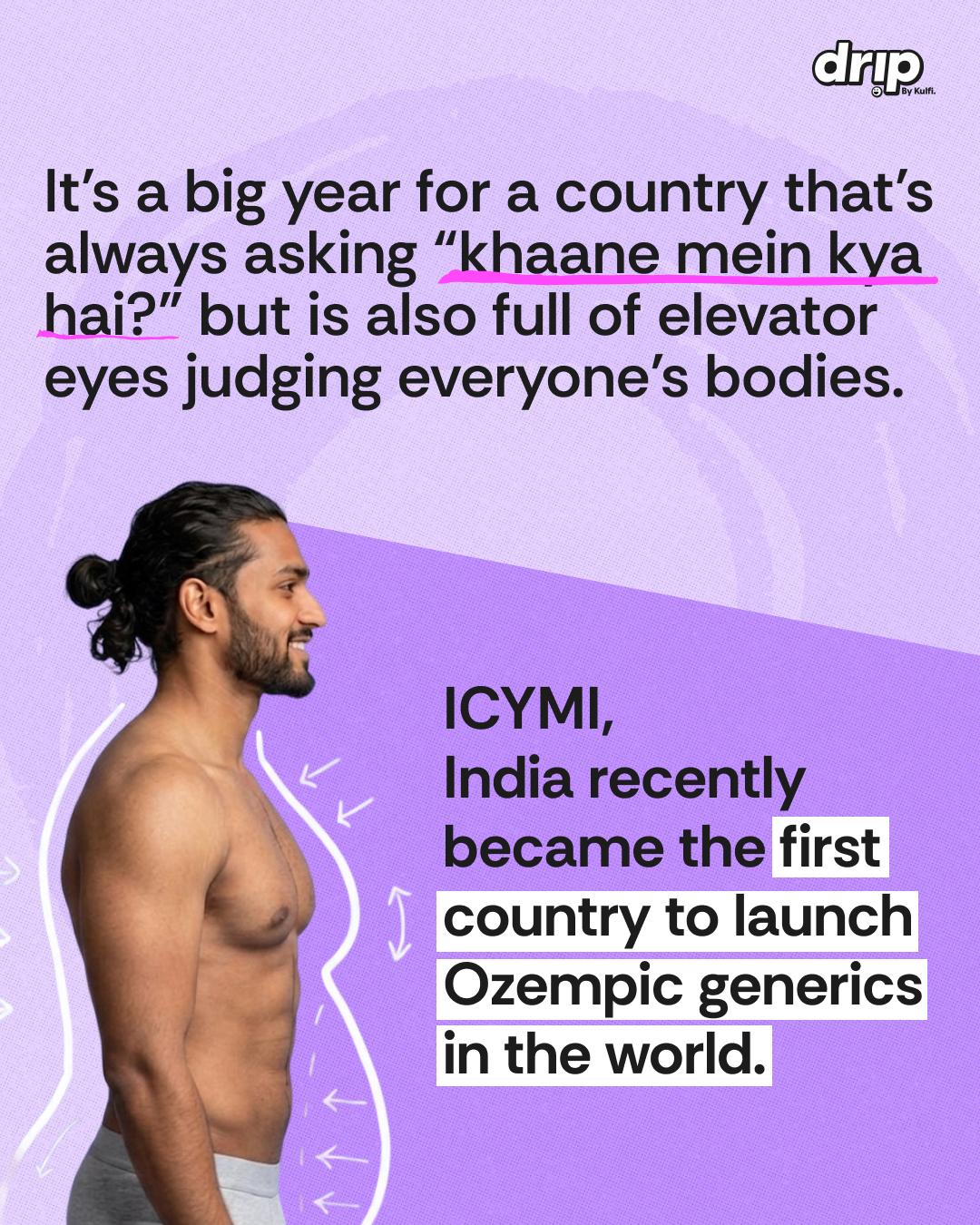
In case you missed it, it’s a big year for a country that is always asking “khaane mein kya hai” but also has an ever-ready “taana” on people’s bodies. India just became the first country to launch Ozempic generics as its parent company, Novo Nordisk, lost patent protection for its blockbuster weightloss drug in March. This has led to a gold rush of cheaper competing versions and one of India’s biggest pharma wars as semaglutide is open for all.
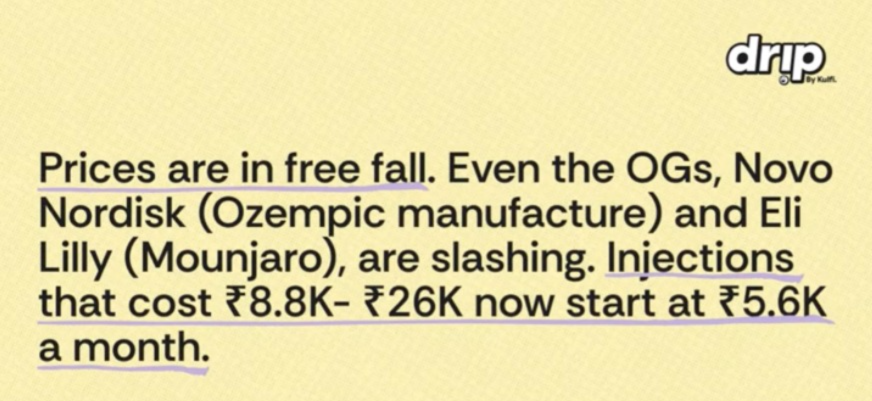
Brands are playing every angle, from changing their supply to price strategies. The OGs Novo Nordisk and Eli Lilly, which manufacture Ozempic and Mounjaro, have also slashed their prices to a base of ₹5,660 per month. Earlier, these weight loss drugs cost a small fortune between ₹8,800 to ₹26,000 a month. The Indian generics will be at least 60% cheaper.
India, which supplies roughly 20% of the world’s generic drugs will now do for weight loss what it once did for HIV treatment, i.e. make it accessible at scale.
In urban India, the drug has moved out of the group chat and is showing up in the lives of our relatives, neighbours and besties. Celebs like Aishwarya Mohanraj and Hansal Mehta are on Mounjaro, or tirzapetide, a drug touted to be more powerful than Ozempic. Tanmay Bhatt gave it a go too. These drugs are fast becoming a part of the bridal treatment packages before weddings. In October 2025, Mounjaro became the top-selling drug by value, raking in ₹1 billion in sales, beating the popular antibiotic Augmentin by ₹200 million. The GLP-1 market in India, is expected to grow at 34.3% every year till 2030 — nearly twice as fast as the global market.
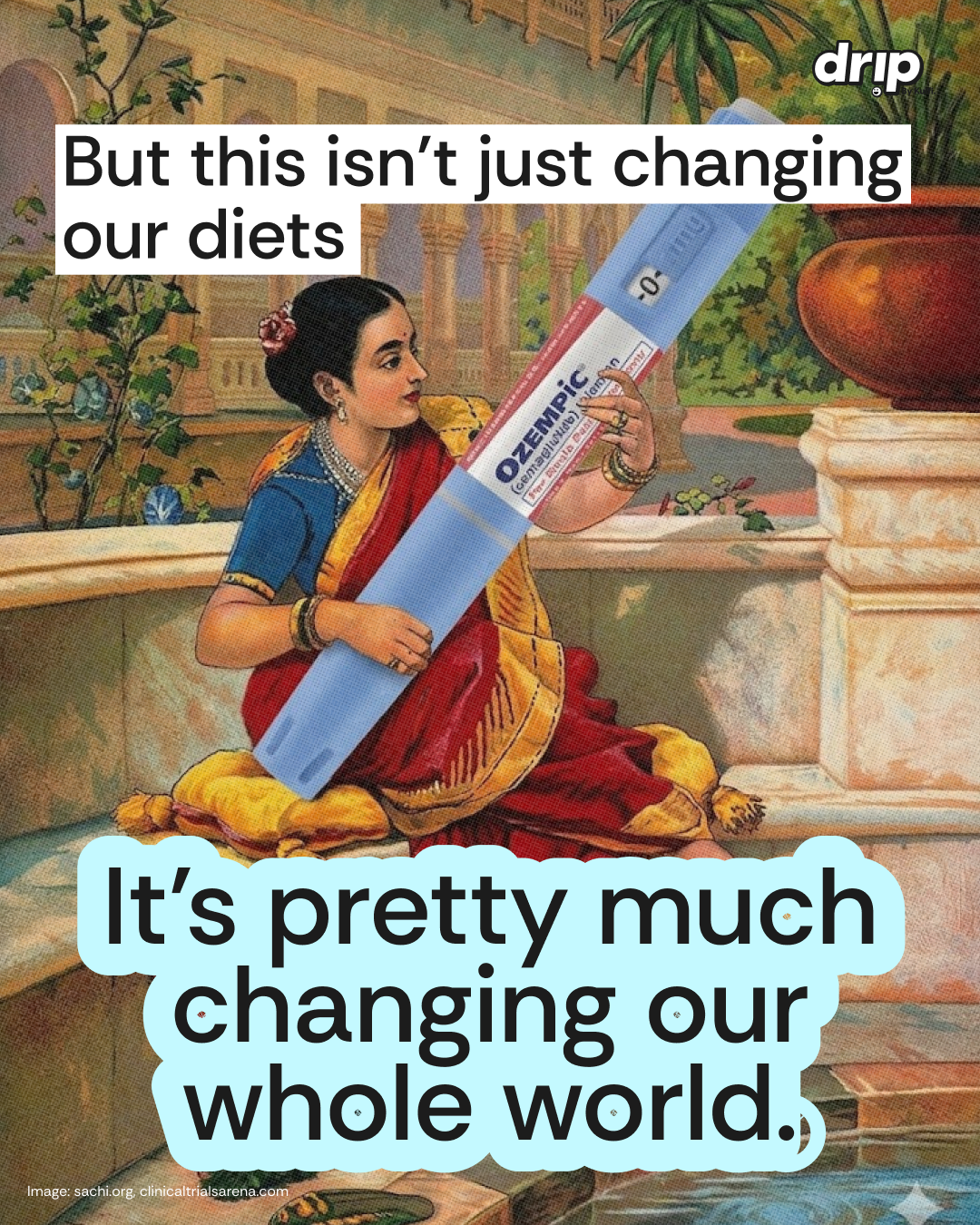
Ozempic and Mounjaro mimic GLP-1, the gut hormone that controls insulin, blood sugar and appetite, which basically rewires how you eat and how often, leading to dramatic weight loss. Ozempic will not just be a ‘pharma story’ and in fact expand to impact multiple sectors in India like lifestyle, beauty, wellness and health and of course food and beverage. It could potentially change culture, identity, maybe even how we relate to each other.
Food will become more inclusive
The F&B experts we spoke to are cautiously optimistic about a decline in snacking and dining, suggesting India is different from the US, with entirely distinct social and cultural systems. Food here is functional but also emotional. Parents don’t say sorry; they cut fruit. Eating is how we care, connect and celebrate. Indians youth go out in large groups, prefer eating in one place and no one has stopped going out because of celiac disease or peanut allergy. Instead, our menus have expanded to be more inclusive. If more people on the proverbial table are not driven by hunger, it’s possible that food and drinks will have to offer that something extra.
By 2030, brands will be more deliberate in using taste, texture and aroma to create multi-sensory products like the Dubai Chocolate and dirty sodas. These innovations will cater to underserved consumer groups like the elderly, neurodiverse and yes, GLP-1 drugs users. We’re already seeing it – Cafe chains like Farzi Cafe are preparing ‘size O’ menus, restaurants like Mainland China are enabling more customisation in ordering. Subway and KFC are introducing mini variations and 3-piece combos.
Impulse and repeat buys will reduce
For decades, food brands have kept us on hamster wheels of impulsive and repeat behaviour by engineering our cravings into irresistible products. GLP-1 drugs disrupt that system at its core. But this is about to change because GLP-1 meds don’t just suppress hunger, they change how we taste food.
Krish Ashok, the author of Masala Lab: The Science of Indian Cooking, says that GLP-1 drugs are exposing the basic question: Would the ultra-processed snacks in your Blinkit cart still be tasty if you weren’t hacked to like it? The drugs will make these products that food manufacturers spent years perfecting, intolerable. When you take these drugs, food itself starts tasting “off”. “[On the meds] The birthday cake that was the perfect level of sweet will taste overwhelming, almost chemical and the potato chips you used to hog will almost be like licking salt,” he says in a reel.
Food delivery apps are preparing for when we finally end our cycle of deleting and reinstalling them. Swiggy has expanded its EatRight tab to 50 cities in January. Zomato launched a Healthy Mode toggle last September.
We’ll shift from holistic health to functional products
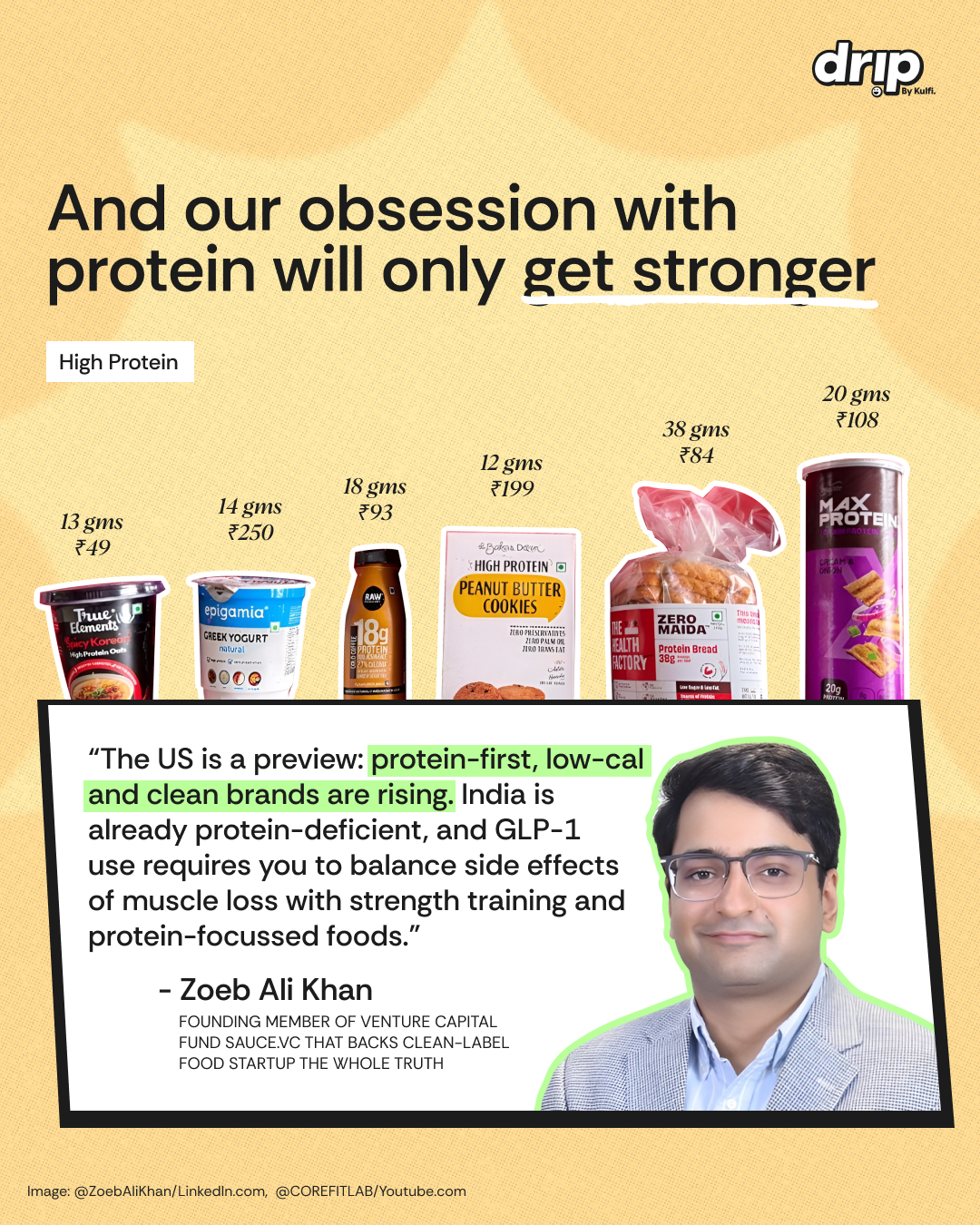
India is entering a post-diet diet culture where optimisation and enhancement is replacing the old deprivation mindset. From detox teas to biohacks, we’re using science to reframe our affinity to natural care and Ayurveda. And if it felt like protein was already having its cultural moment, we’re going to see it become a full-blown phenomenon as people become even more intentional about selecting foods based on their nutrient and vitamin density.
“In the US, protein-first, low calorie and clean food brands like (protein bar brand) David, Chobani and Perfect Day are going up. So there’s precedent, says Zoeb Ali Khan, founding member of the early-stage venture capital firm Sauce.vc that backed the clean food label The Whole Truth. “India is already considered to be protein-deficient. Consumption of GLP-1 meds, which requires you to balance its side effects of muscle loss with strength training and protein, can also lead to an increase in GLP1-focussed foods.” For example, big food companies like Nestlé and General Mills are introducing high-protein, nutrient-rich products. While Nestlé rolled out its first new brand in 30 years, General Mills is specifically targeting GLP-1 users through marketing.
And as the pharmaceutical disruption of human desire takes place, food is only the first domino. Fitness, beauty and fashion are next.
Rise of all-in-one platforms and apps
Managing one’s health has become a full-time job. Track your meals, check food labels, hit your protein goals, stay in and eat home food, fix your gut, and somehow stay consistent. “[Ozempic] takes the pressure off this constant biological and social fight,” says nutritionist and wellness coach Nayantara Bagla. “PCOS, thyroid, and gut issues are also metabolic diseases, not just hormonal. But so many people, especially women, are told by their gynaecologists and endocrinologists to lose weight and come back.”
It’s no wonder some users are beginning to see Ozempic as a kind of ‘Ram Baan ilaaj’ (an all-purpose cure). “There's a lot of magical thinking around Ozempic use,” says Hena Faqurudheen, psychotherapist and CEO at the Hank Nunn Institute, a not-for-profit mental health organisation. “People in the early stages are already attributing unrelated improvements. One says their PCOS is gone at a 2mg dose, another believes it’s curing their migraines. With so much desire and aspiration tied to it, correlation quickly starts getting mistaken for cause.”
Indians are bad at taking medicines. Medication nonadherence and self-medication are known public health challenges. We all know that one diabetic relative who’ll eat cake because they’re compensating with medication anyway. There’s a need to take control over all this health-related information overload.
“You could see a holistic GLP1 platform come up – one that doesn’t just provide the drug but also manages the treatment and its side effects or maybe even guides you through the process.” There is room for existing players to adapt too. “Gyms, for instance, could offer GLP-1-assisted weight loss regimes tailored to this shift.”
Fashion will regress to thinness
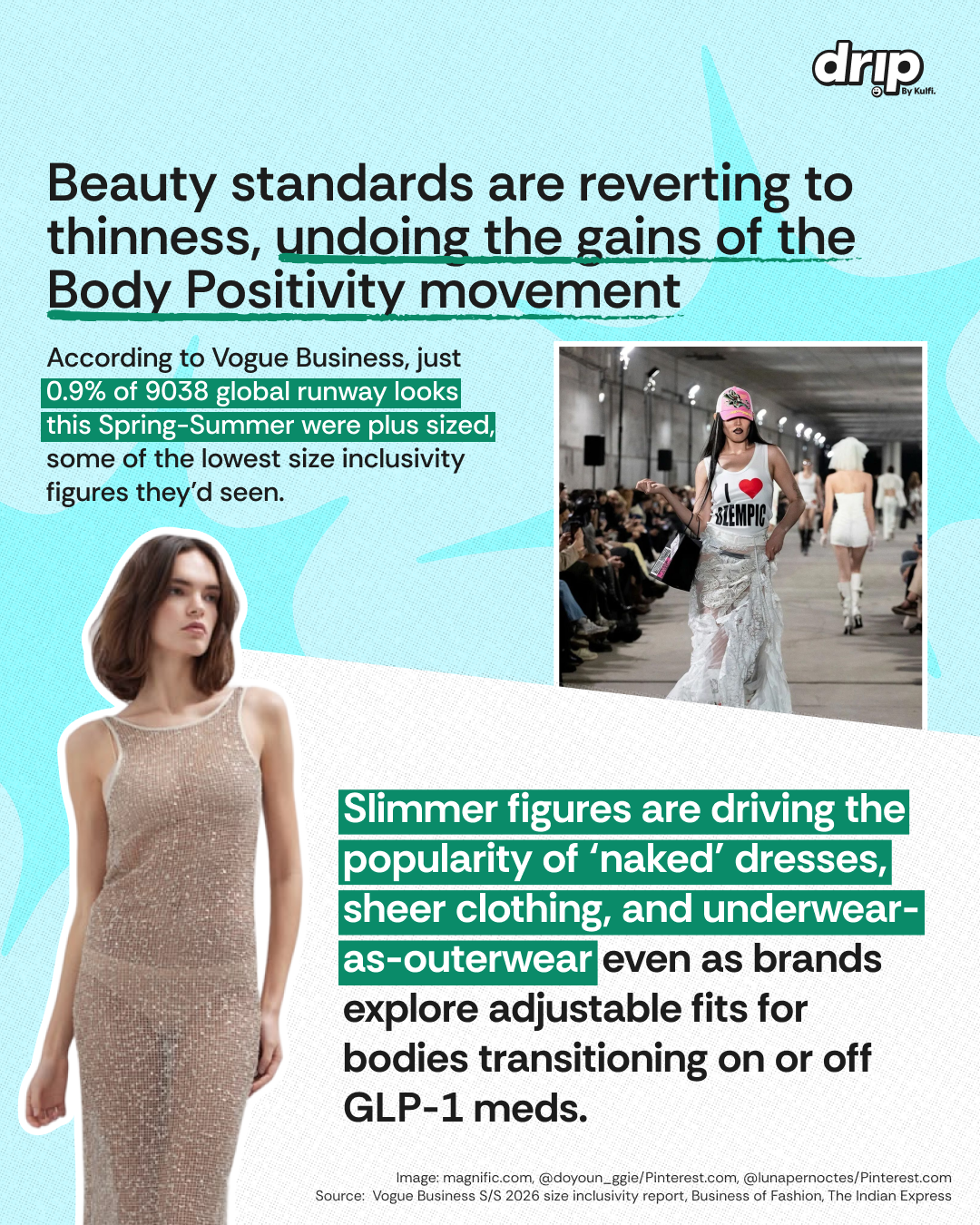
Beauty standards abroad are not just undoing the gains of the body positivity movement and returning to thinness, they’re legit skewing ultrathin. The Vogue Business Spring/Summer 2026 size inclusivity report revealed that only 0.9% of the total 9,038 looks displayed during major fashion weeks were plus-sized.
‘Body-confident’ apparel like shapewear, sheer clothing, and underwear as outerwear have characterised the ‘naked’ trend since 2023, but globally, brands are also preparing for dynamic fit solutions with adjustable silhouettes for people who might be coming off GLP-1 medications or starting to go on them.
It’s also notable that the desire for thinness isn't only a feminine preoccupation anymore. More young men and queer folk are into looksmaxxing than ever. They’re following extreme diets to achieve sharp jawlines and using steroids to get that overly masculine figure.
Medical beauty treatments for firming, filling and tightening will surge
India’s relationship with beauty brands and cosmetics has changed from occasion-based use to everyday, and is likely to become more concern-based and personalised in the future.
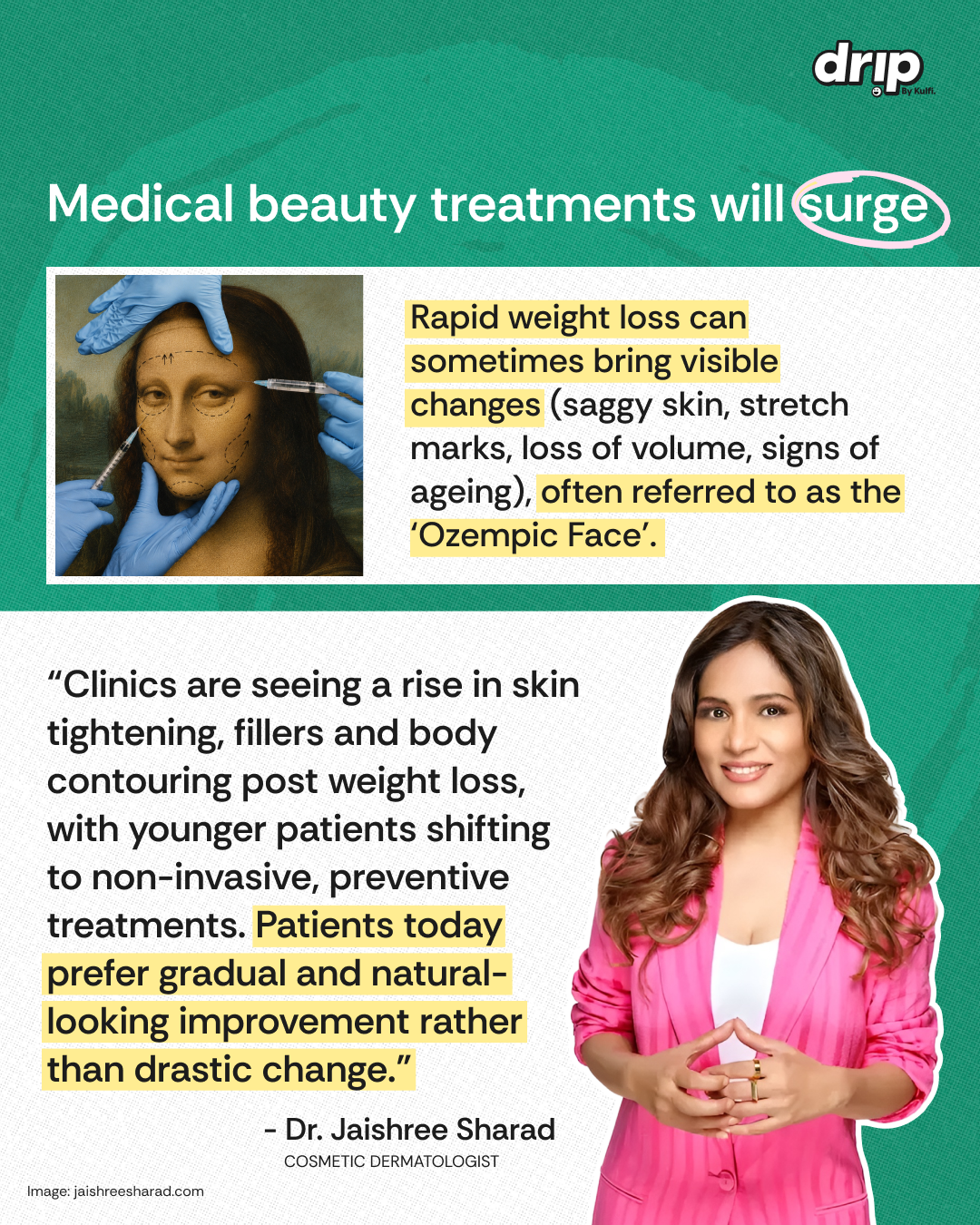
We’ve heard about ‘Ozempic Face’, which is marked by loose skin, stretch marks, loss of volume, sunken eyes, hanging jowls and other signs of ageing due to sudden and rapid weight loss. “Clinics are seeing more requests for skin tightening procedures, collagen stimulators, fillers, and body contouring after significant weight loss. There is already a clear shift toward non-invasive, preventive, and regenerative procedures, especially among younger patients,” says cosmetic dermatologist Dr. Jaishree Sharad. More Indians are opting for medical aesthetic treatments rather than relying solely on salon visits in recent years. In 2024, we set a record with 1.29 million beauty treatments.
We are yet to see the long-term and culture-changing effects of these weight loss medications but this is the time to show sensitivity and build credibility and long-term trust. The hype around Ozempic slyly props up the same long-held systems and beliefs around weight shaming. “Brands should show realistic results and focus on authenticity, transparency, and education rather than promoting perfection,”says Dr. Sharad. “It is important to talk openly about normal changes such as ageing, weight loss, acne, pigmentation, and scarring so that people understand these are common and treatable, not flaws. Brands that acknowledge both the physical and psychological aspects of skin and body image can position themselves as supporters of overall well-being, not just beauty.”

