And why brands shouldn’t ignore the second largest anime fandom in the world.
By Shivam Srivastav
TL;DR
This fandom shows up. From sold-out 5 a.m. movie screenings to 25,000-strong conventions, anime fans legit invest time, money, and identity rather than merely consume.
Merch is the real business layer. In anime, apparel and collectables are how culture travels, making merchandise the most scalable and emotionally charged opportunity for brands in India.
Friction is part of the signal. Piracy, young audiences, and strict IP rules make anime harder to enter but also harder to fake and grant greater relevance when done right.
Anime offers cultural association and reach. Instead of just borrowing attention, brands that engage thoughtfully earn credibility inside communities.
Don’t chase hype; build ecosystems. Partner with communities early and identify the fans within your own organisation who can bring cultural authenticity to the work.
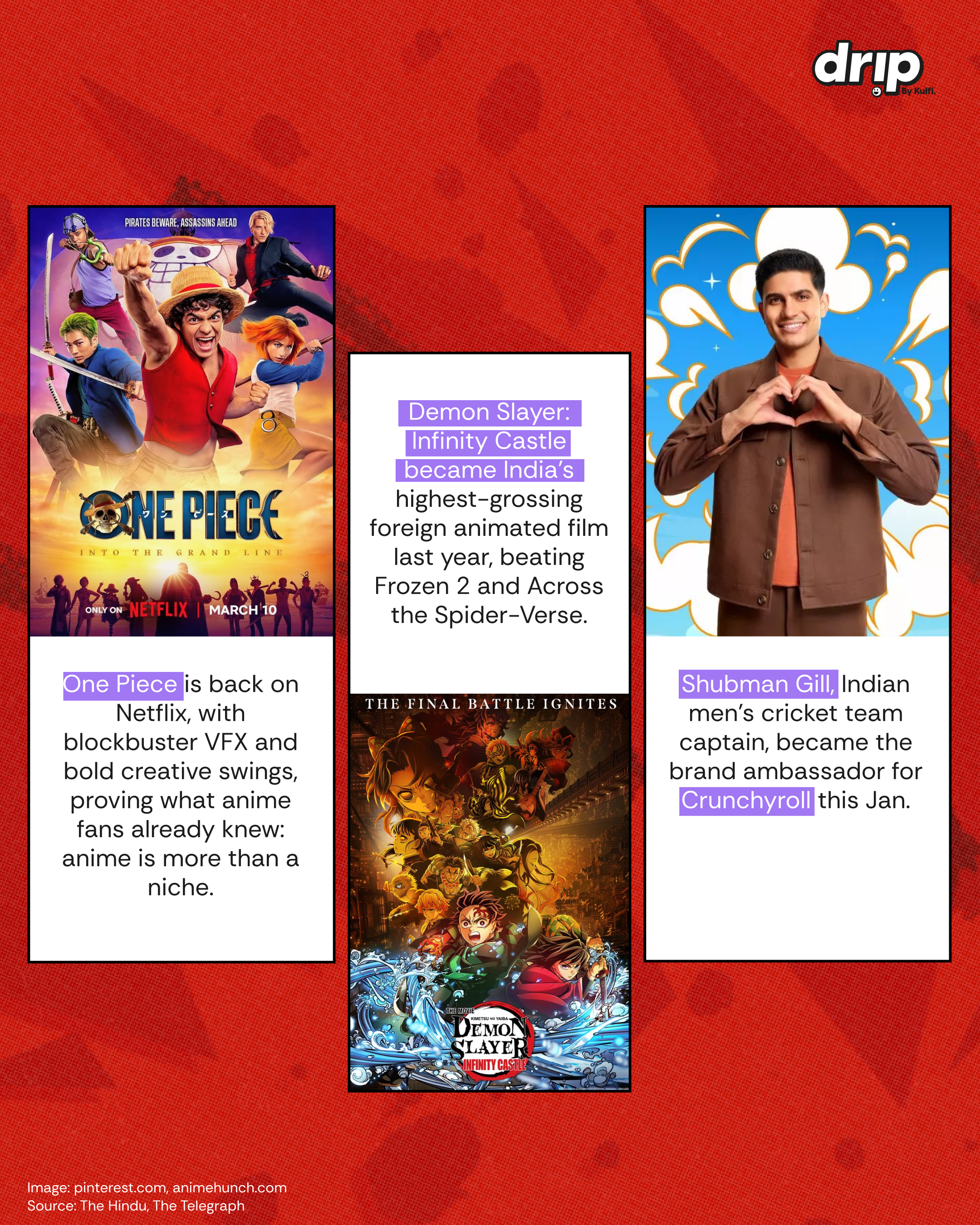
In September 2025, Demon Slayer: Infinity Castle, a Japanese anime film with almost no mass-market advertising, opened across more than 1,900 screens in nearly 600 Indian cities, eventually becoming the highest-grossing foreign animated film in India. Collecting ₹47.7 crore in its first five days, it outpaced the Indian debuts of Frozen 2 and Across the Spider-Verse. This was not merely a box-office success; this was a cultural validation moment for anime in India.
What started as a nerdy niche is now a hot collaboration magnet. 2026 opened with Shubman Gill, captain of the Indian men’s cricket team and one of the country’s most recognisable sporting figures, becoming the brand ambassador for anime streaming platform Crunchyroll.
These moments suggest something bigger than one-shots: Anime is moving from the fringes to India’s cultural mainstream.
Fandom Without A Funnel
Anime fandom in India is often flattened into a stereotype: Gen Z, male, online, maybe nerdy. In reality, it behaves more like a cultural ecosystem, one that carries audiences from childhood into young adulthood without forcing them to age out.
From The Jungle Book on Doordarshan to cable-era staples like Dragon Ball Z and Pokémon, Indian audiences were hooked early. There are various reasons for anime’s universal appeal like the characters’ big heartedness, authenticity, their commitment to self-improvement. One anime is simultaneously a screwball comedy, morality play, sports drama, domestic sitcom, or sci-fi horror, expanding their overarching genres of Shounen (anime for boys) or Shoujo (girls). Anime also has native genres that don’t exist elsewhere, like isekai, where characters are transported to a parallel world. In fact, experts recommend leaning into the various subgenres like ‘iyashekei’ or ‘healing anime’ that takes viewers to alternate realities like idyllic nature and serene vistas.
Anime’s more mature themes also caters to adolescents uniquely as cartoons primarily focus on children below 10. These shows draw diverse viewers despite the ‘othering’ that usually happens with non-English entertainment and despite the accessibility barriers before official entrants like Crunchyroll in the market. “It’s not cartoons, it’s Anime!” is a common battlecry on online forums and you can find an Indian anime fan in their teens, 20s, and even in their 30s and 40s everywhere from Kerala to Northeast India.
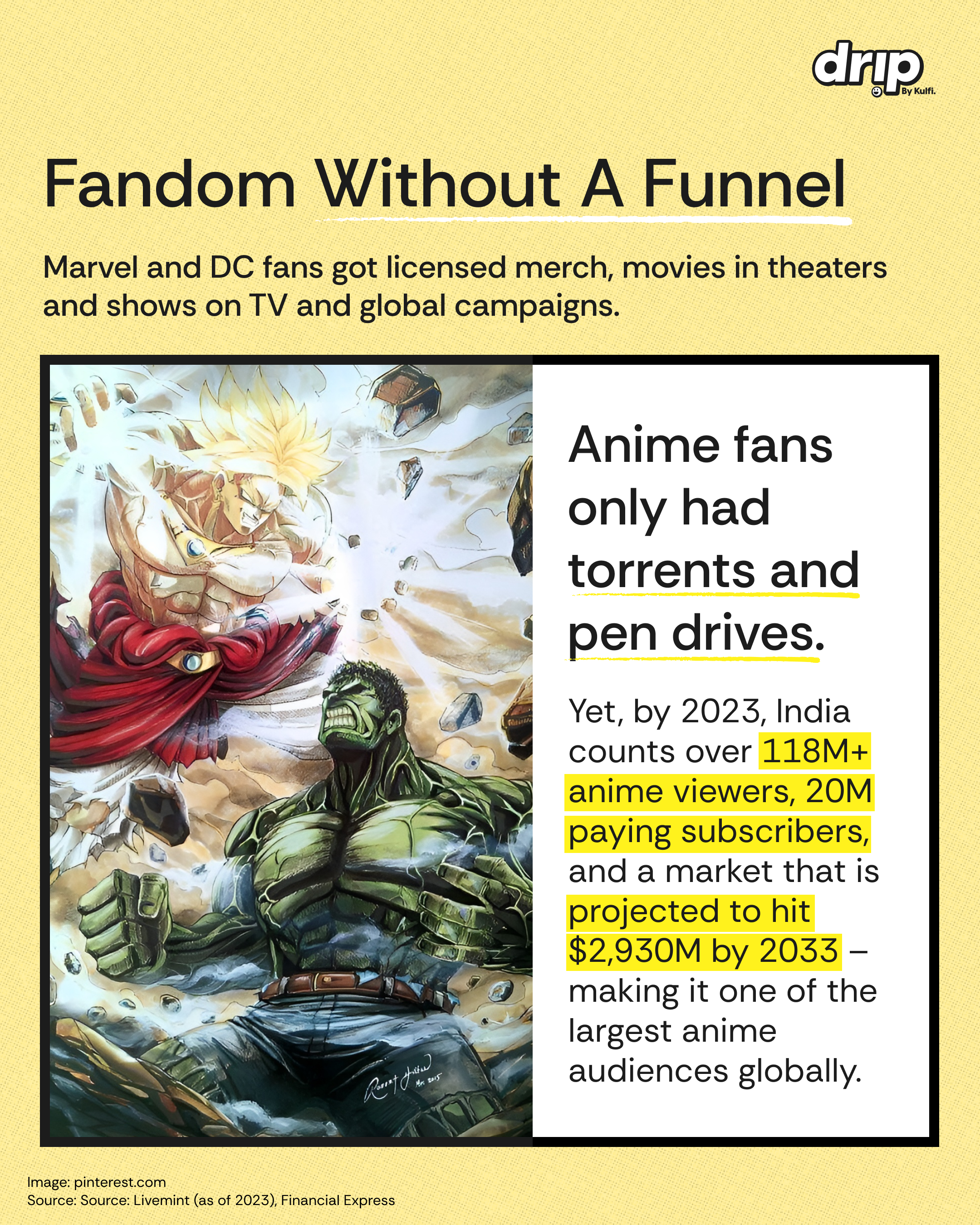
While franchises like Marvel and DC were built for discovery with theatrical rollouts, licensed merchandise, cable programming, and global campaigns, anime fans didn’t have that infrastructure. Marvel fans gathered in the open and brands knew where to find them. Anime grew outside official channels. For years, most new titles circulated informally, through illegal streams, pen drives and torrent sites. The result was scale without visibility.
By the time platforms and licensors entered the picture, the Indian fandom was already organised and engaged. In 2016, a 15-member fan collective from Delhi called AnimeTM Dubbers spent nine months painstakingly redesigning sound and syncing dialogue to recreate a near film-quality Hindi redub of 2016 romance anime Your Name. Though copyright strikes shut them down, fan dubbers like them had introduced anime to millions of non-English-speaking viewers in India.
Today, India counts over 118 million anime viewers (as of 2023), around 20 million paying subscribers, and a market valued at over USD1 billion, making it one of the largest anime audiences globally. According to Imarc, the Indian anime market size had already cracked the $1,098 million-mark in 2024 and is expected to hit $2,930 million by 2033, growing at 11.5% from 2025-2033.
Fandom in the Flesh
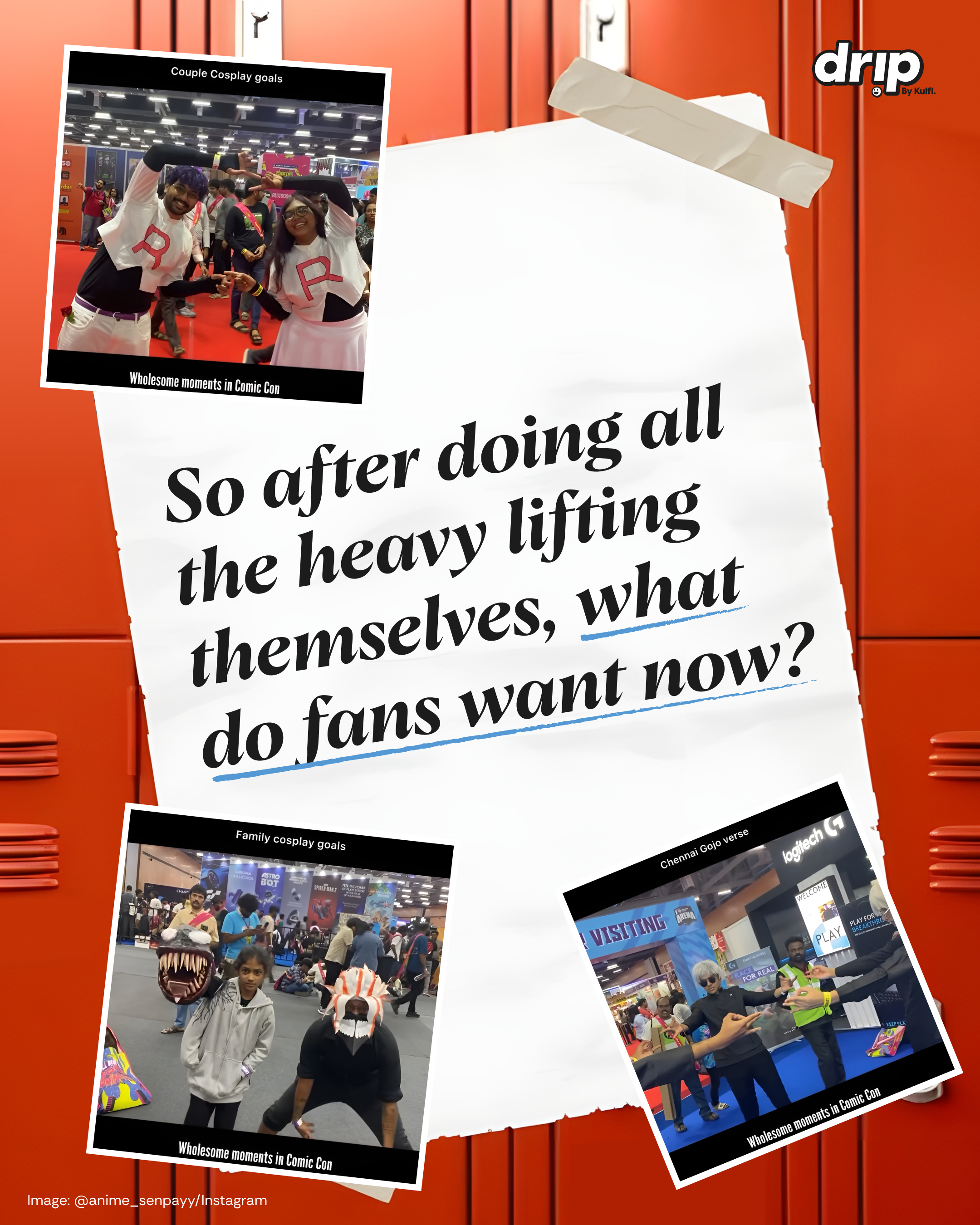
With Comic Con expanding from Delhi and Mumbai to cities like Hyderabad, Bhubaneshwar and Nagpur, we’ve already seen how anime fans love to express their fandom in person. But we also have new offline events like Anime India, India’s first large-scale, anime-only convention that took place in Mumbai, August 2025 and drew over 25,000 attendees across two days, and fan screenings . “We had over 400 registrations and sold out all 310 seats instantly,” said Deven Gupta, founder of the Delhi Anime Club and head of anime-focused agency, Clyster Media, which had also organised a fan screening of Demon Slayer: Infinity Castle during its release. Demand was so high that PVR added a 5 a.m. show, with tickets priced at ₹700-800 and resales reaching ₹2,800.
Anime India programmers also brought cultural heavyweights like Tetsurō Araki — the director behind Attack on Titan and Death Note. For many Indian fans, Death Note was a gateway into anime’s darker, more cerebral storytelling, while Attack on Titan helped push the medium into political themes and cinematic scale. “[Araki] felt a genuine connection with the audience,” Gupta says. “The questions were deeply researched - this wasn’t surface-level fandom.” Fans sat through hours-long, scene-by-scene breakdowns of early episodes without leaving.
Queuing under the hot sun, traveling cities, and spending entire days immersed is defining behaviour. Anime fans don’t just consume. They show up. And that’s the signal brands are finally seeing. What began as smaller brands selling anime apparel and memorabilia has evolved to collaborations with Sony, PVR, Lenovo, and Intel.
Too Merch and Never Enough
In anime, merchandise isn’t an afterthought. Unlike film franchises where merch follows theatrical success, anime merchandise often outlasts screen consumption.
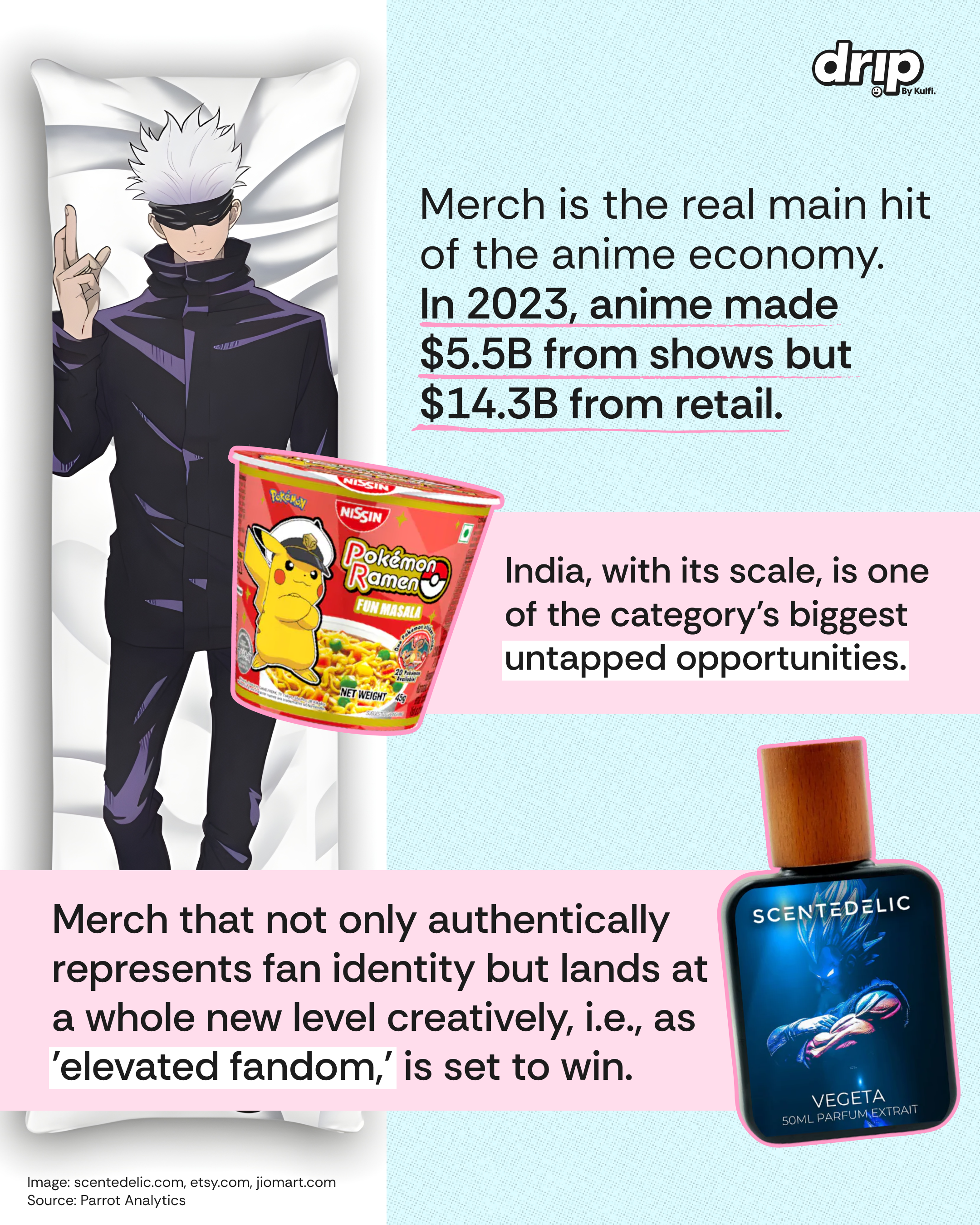
From more generic apparel and figurines to books, toys, posters, and collectibles to the surprisingly niche Pikachu-themed instant noodles (Pokémon), Vegeta perfume (Dragon Ball Z) to Dakimakura (character body pillows), merch allows fans to signal belonging long after an episode airs.This matters in India, where anime viewership is massive but subscription spends remain low. Merchandising makes up the largest share of anime-related revenue streams globally. India, with its scale, represents one of the biggest untapped opportunities in the category.
The Souled Store (TSS), a ₹1,420-crore merchandise company, built its business on fandom-driven design, and anime is now one of its fastest-growing categories. TSS holds official rights for One Piece and Naruto (the anime equivalent of owning Iron Man and Superman).With anime, TSS isn’t chasing hype; it’s building long-term presence. According to Pranav Nambiar, Growth Marketing Manager at TSS, the brand partnered with Aniplex – the studio behind Demon Slayer – well before the film entered public conversation.
“The success of the movie obviously makes an impact on merchandise as well but it does not always correlate. It all depends on whether that fandom is into wearable merch… Demon Slayer is an extremely wearable fandom because the characters are wearable and the fans are the ones who love wearing merch to represent,” said Nambiar.
Design is where TSS sets itself apart. Instead of literal character prints, TSS designs from the essence of a fandom. A Demon Slayer T-shirt might reference Tanjiro’s signature chequered kimono pattern rather than slap his face on it - an approach the team calls “elevated fandom design.”
Products are styled as fashion-first pieces that signal fandom to those who recognise it, but still appeal to those who don’t. “If heavy fandom designs feel too much for you, we style them as fashion pieces that simply elevate your look. We never gatekeep. Instead of shooting products on mannequins or doing AI mockups, we invest those resources into creating visuals that help people feel the product - to connect with its vibe, not just the fandom behind it,” Nambiar added.
This philosophy transcends TSS. What’s striking about anime collaborations globally isn’t their volume, but their intent. Instead of borrowing characters and IP, brands are embedding fandom into everyday life. Uniqlo’s Studio Ghibli UT line sold nostalgia. boAt’s Naruto headphones folded anime aesthetics into daily tech. Revenant Esports’ Naruto collaboration hints at anime spilling into esports culture.
Globally, Crocs turned Jujutsu Kaisen into casual footwear, while Duolingo used anime to make language learning playful. In each case, the collaboration doesn’t ask fans to consume more content but invites them to live inside the culture, one habit at a time.
The Friction Is Real - And That’s The Point
Anime sounds like exactly the kind of cultural trend marketers are chasing. But if it sounds too good to be true, it kinda is. Piracy still rules, illegal merchandise massively undercut official products on price and availability, and the core audience skews young – highly engaged but limited in disposable income. Add strict licensing rules and creative guardrails from Japanese IP holders, and anime stops looking like easy conversions.
But these constraints exist because anime isn’t a lightweight trend; it’s a long-term cultural system. That’s why IPs like One Piece or Naruto endure for decades - not by chasing novelty, but by building worlds audiences grow into and stay emotionally invested in. For brands, anime offers a strong cultural association, not just reach. Aligning with anime signals global awareness, youth relevance, and cultural fluency without needing to over-communicate intent. Take TSS’ collaboration with Yazu, a Pan Asian restaurant in Lower Parel, Mumbai in 2024. The brand transformed an anime drop into a fine-dining event, ‘Recreating Anime in Food’ in 2024. It didn’t just sell merchandise; it translated fandom into flavour, smell and sound, drawing over 500 fans across three days and clocking more than half a million views online.
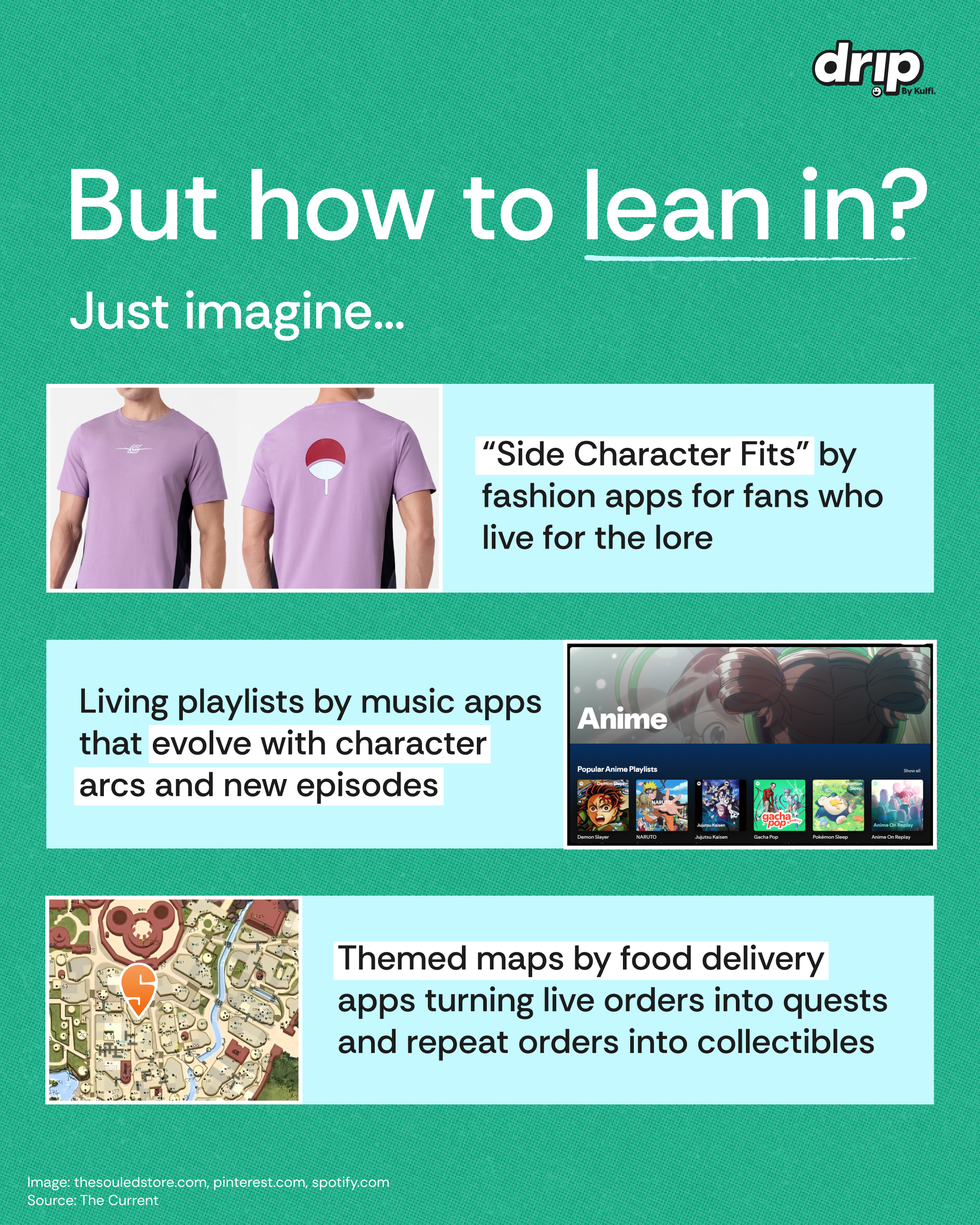
- Fashion apps could drop “Side Character Fits”
Fashion inspired not by main characters, but by side characters. Each drop includes lore cards and styling videos narrated like character intros. Perfect for micro-communities that live for deep cuts.
- Music apps could turn playlists into ‘Living Storylines’
Show specific playlists that shift with fan input, character arcs, or new episodes. They could even host fandom-led listening parties for iconic OSTs or album anniversaries, turning streaming into a shared ritual.
- Food delivery apps could do “Ramenverse Pop-Ups”
Instead of generic food festivals, the apps could host rotating ramen pop-ups in Delhi, Mumbai, Bangalore – each one themed like an anime village with NPC-style staff, stamps, missions, and collectables fans can chase across cities.
In an attention economy stretched thin, anime offers something increasingly rare: a participatory culture with depth. Brands that recognise this won’t just market to fandoms but actually build relevance with the audiences shaping the future.